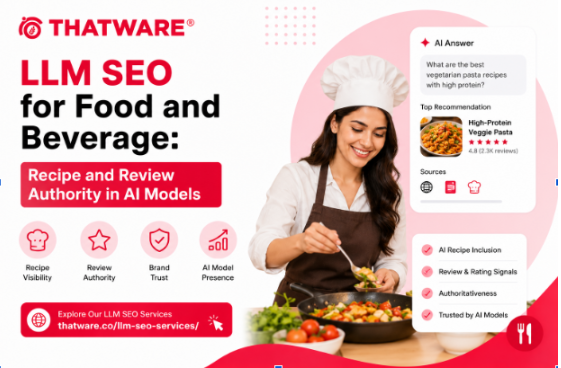
Food and beverage is one of the most searched and discussed categories on the internet — and it’s becoming one of the most queried categories in AI assistants as well. People ask AI about what to cook, where to eat, what products to buy, how to pair wines, which restaurants are worth the drive. For F&B brands, producers, restaurants, and media properties, LLM visibility in this category is both a significant opportunity and an increasingly competitive space.
The AI Food Query Landscape
The food and beverage AI query space is diverse. Home cooks ask for recipe guidance and ingredient substitutions. Diners ask for restaurant recommendations and neighborhood food guides. Shoppers ask for product recommendations and quality comparisons. Enthusiasts ask about wine pairings, cocktail techniques, and specialty ingredient sourcing. Each of these query types represents a distinct visibility opportunity — and a distinct optimization challenge.
Brands and platforms that want to appear consistently across this diverse query landscape need to build authority across multiple content dimensions, not just optimize for one type of food query.
Recipe Content and AI Citation
Recipe content is among the most heavily queried food topics in AI assistants — and also among the most competitive. The recipe sites that AI systems cite most consistently tend to have: clear, well-tested recipes with specific instructions and reliable measurements, original photography that establishes authenticity, extensive user review and feedback history, author credibility signals (culinary credentials, professional background, demonstrated expertise), and technical content quality (structured data, clear ingredient lists, step-by-step format).
For brands thinking about how eCommerce LLM SEO services principles apply in the food space — specifically, how product discovery through AI works — recipe integration is a powerful tactic. Brands that create and own the authoritative recipe context for their products or ingredient categories are well-positioned to appear in AI responses to related cooking queries.
Restaurant and Dining Recommendations
The restaurant recommendation AI query is particularly complex. AI systems are synthesizing information from review platforms (Yelp, Google, Tripadvisor), food media (Eater, Infatuation, local publications), editorial guides (Michelin, Zagat where applicable), and direct restaurant content. The restaurants and brands appearing most consistently in AI dining recommendations tend to have strong presences across all of these surfaces simultaneously.
For restaurant groups and hospitality brands, this means treating digital reputation management as LLM SEO infrastructure — not just for customer perception purposes, but as a prerequisite for AI citation share.
F&B Product LLM SEO
For food and beverage product brands — specialty foods, craft beverages, health and wellness F&B — LLM visibility in product recommendation queries is a growing and valuable channel. As consumers increasingly ask AI assistants for product guidance in food categories, the brands that appear in those recommendations gain consideration at high-intent moments.
Building the kind of content and third-party presence that drives F&B product AI citations involves: building topical authority in the category your product addresses, earning reviews and coverage from food media and specialty platforms, and ensuring your product is represented accurately and positively across review aggregators.
The Authority of Specialty Expertise
One advantage F&B brands and media properties have in LLM SEO is that deep, specific expertise is highly valued in this category. The wine educator who produces genuinely authoritative content about natural wine. The chef whose technique breakdowns are genuinely instructive. The food writer who provides real cultural context for the cuisines they cover. This kind of specific, credible expertise is exactly what AI systems are looking for when they increase visibility in large language models for brands that have it.
Generic food content — recipe roundups without original testing, restaurant lists without genuine editorial curation — is increasingly deprioritized as AI systems become better at distinguishing authentic expertise from aggregated content.
Seasonal and Trend Responsiveness
Food and beverage is a trend-sensitive category. AI queries about seasonal ingredients, food trend questions, and holiday cooking assistance all represent timely visibility opportunities. Brands that produce fresh, current content responding to genuine food trends — not manufactured content pretending to trend relevance — build both the recency signals and the authority signals that AI systems favor.
The investment in consistently fresh, expert-quality content is the core of a durable F&B LLM SEO strategy.